-

Flushing Your Contact Lenses Is Killing the Environment
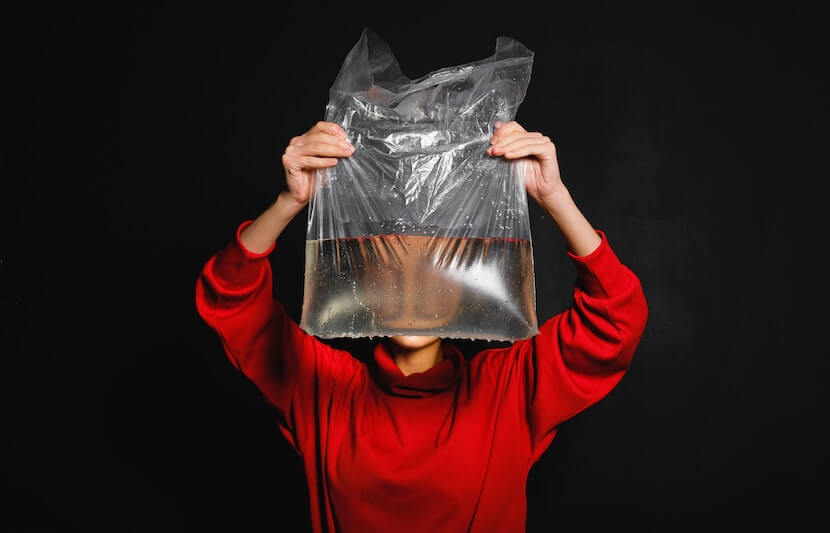
There has been a lot of publicity surrounding the ill-effects of single-use plastics on the environment, but now the finger is pointed at a new pollutant — contact lenses. Researchers from Arizona State University (ASU) have determined that flushing or throwing contact lenses down the drain is harming animals, humans and the environment. If lenses Read More
-

New Algorithm Provides Real-Time Monitoring of Groundwater Pollutants
A team of researchers has developed a new, low-cost method for continuous, real-time monitoring of groundwater pollution. The development could provide a critical boost for “green” remediation efforts that reduce groundwater contamination without adversely affecting the surrounding environment. The study, entitled “In Situ Monitoring of Groundwater Contamination Using the Kalman Filter,” is the result of Read More
-
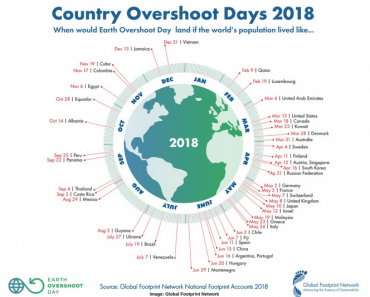
Earth Overshoot Day: Humanity Has Already Used Up 2018’s Natural Resources
Earth Overshoot Day, the date that marks when humanity has consumed more resources than the earth’s ecosystems can replenish in a year, has fallen on August 1 this year — the earliest ever. According to Global Footprint Network, humans are using earth’s resources 1.7 times faster than the planet can regenerate. Essentially, in 2018, we Read More
-
The Global Push to Eliminate Single-Use Plastics
The fight to eliminate single-use plastics has gained momentum in 2018 as major corporations, including Starbucks, McDonald’s and Disney, have pledged to replace plastic straws with more sustainable products. The announcements come at a time when the environmental impact of plastic waste is increasingly hitting the mainstream. In the U.S. alone, nearly 500 million plastic Read More
-
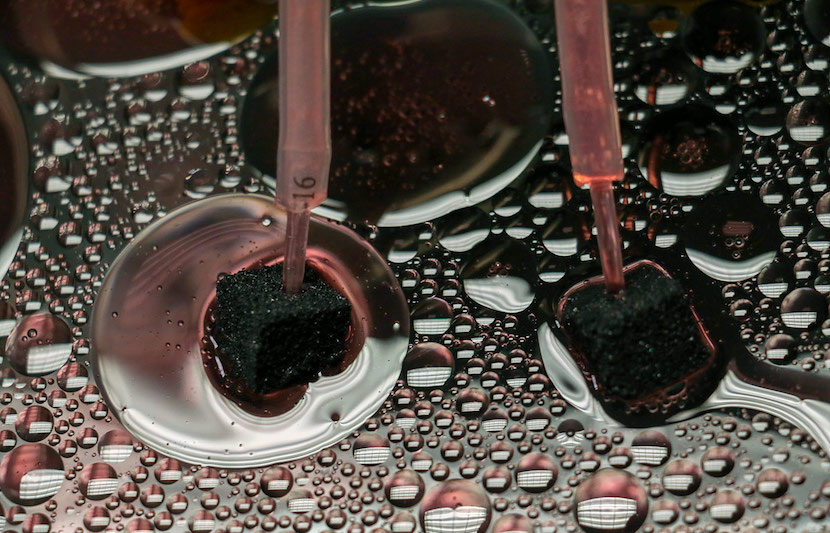
Oil Spills? Sustainable High-Tech Sponge Could Be the Answer
A team of student-researchers from the University of Central Florida (UCF) has developed high-tech sponges capable of cleaning up ocean water after oil spills. The sponges can soak up oil while repelling water, and they don’t leave behind any toxic byproduct. The collected oil could even be recycled for future use. “Oil-water separation is an Read More
-
Re-Using Plastic to Remove Harmful Pollutants in Wastewater
A team of researchers has developed a method to re-use common plastics to break down other harmful pollutants found in wastewater. This method tackles two grave pollution issues at once: plastic pollution that threatens our ecosystems and presence of carcinogenic synthetic dyes in wastewater. The team’s method portrays how polystyrene, a plastic frequently seen in Read More
-
TU Eindhoven Is Turning Smartphones Into Tricorders
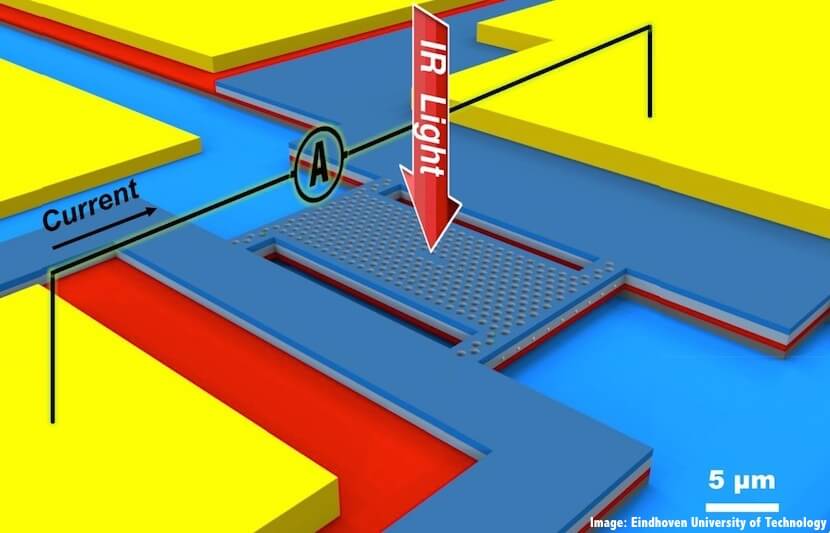
Just like the tricorder popularized by Star Trek, smartphones outfitted with a micro-spectometer recently developed by researchers at the Eindhoven University of Technology (TU/e) in the Netherlands could be used by users to glean crucial information from the environment around them. The new micro-spectrometer is small enough to fit in a cell phone, but precise Read More
-
US Universities Moving Towards Bicycle Friendly Campuses
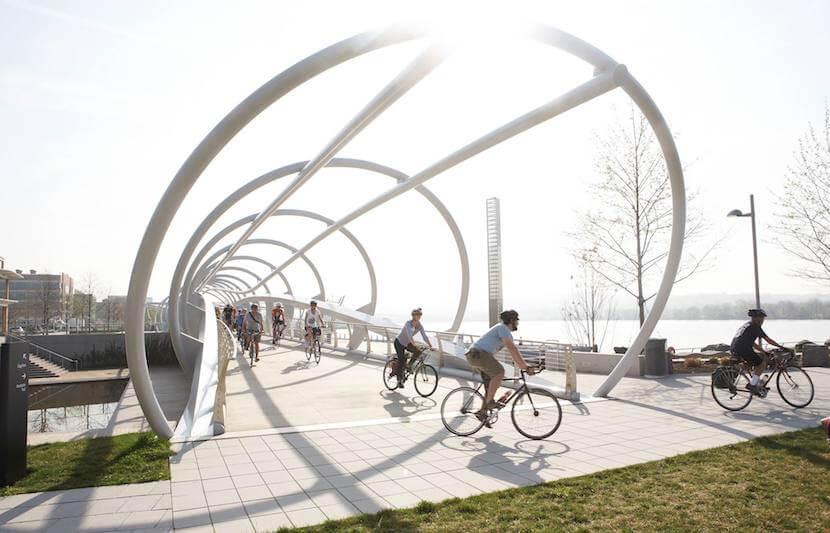
At Yale University, a typical morning bustles with bike commuters on its largely car-free campus roads. A recently honored Gold-level Bicycle Friendly University, Yale has all kinds of programs and perks encouraging bike riding on campus. And it is definitely not alone. Across the country, college campuses are going green with bicycles. And just like Read More
-
Stanford University Researchers Tackle Pollution From Artisanal Brick Kilns to Save the Environment and Improve Health
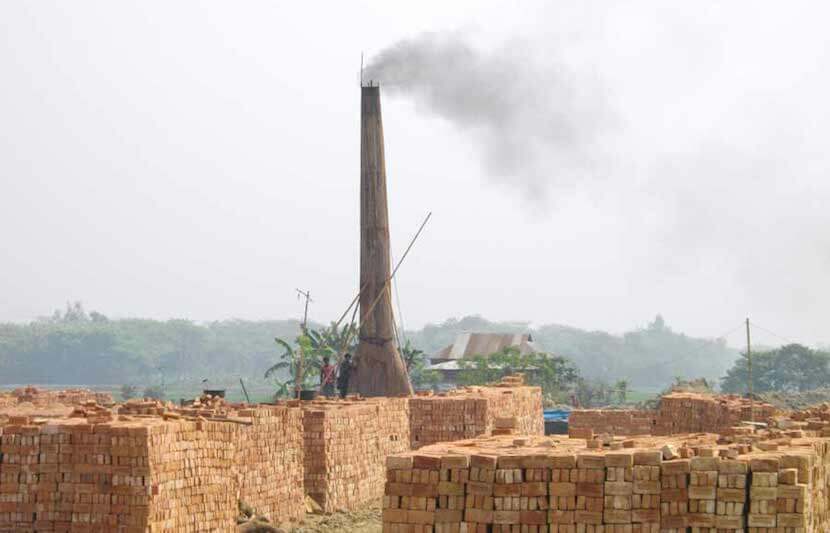
Artisanal brick kilns contribute significantly to pollution in developing nations. Fortunately, a team of researchers from Stanford University has come up with a novel way to reduce pollution from such brick kilns. The team’s approach could have a major impact in mitigating global warming, improving air quality, and reducing negative health effects in adjoining communities. Read More
-
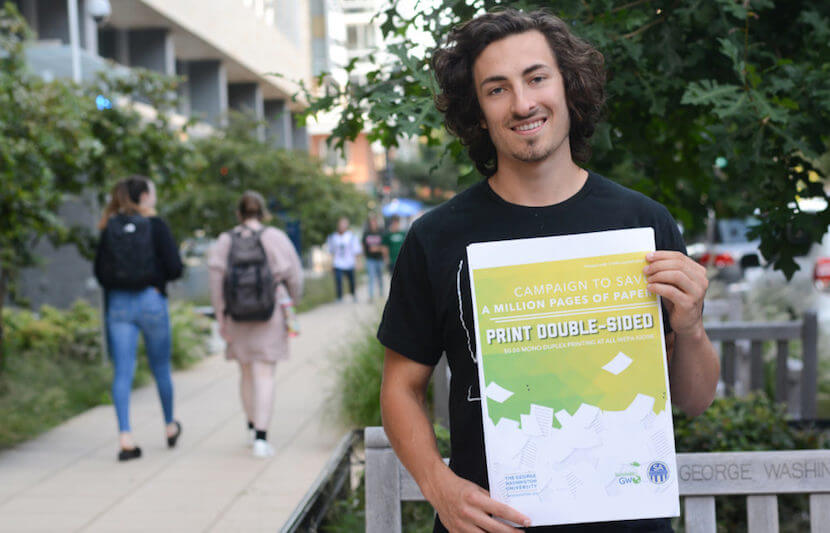
George Washington University Student Creates ‘Save A Million’ Campaign
The Student Association (SA) at The George Washington University (GW) has launched a campaign to save 1 million pieces of paper by next summer at the behest of Logan Malik, a senior and SA’s director of sustainability policy. The campaign kicked off on September 10, and will run through June 2018. The “Save a Million” Read More
-
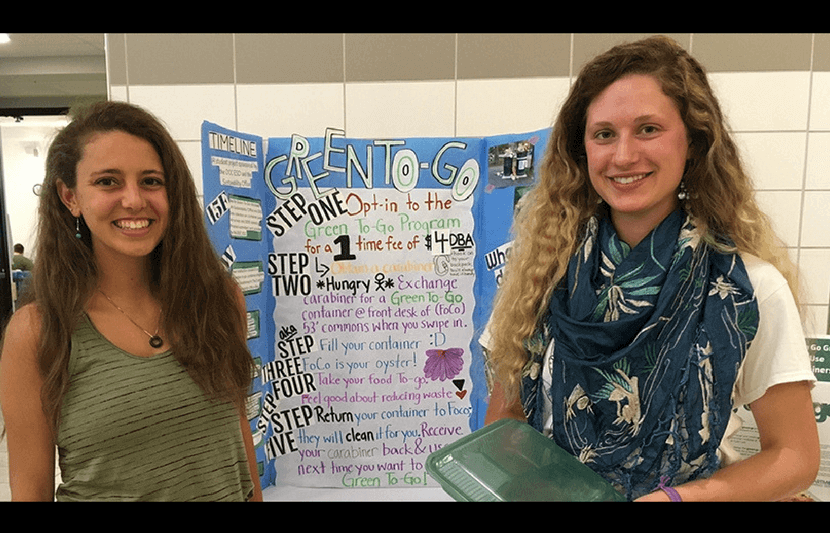
Dartmouth College Student Introduces Campus Green2Go Food Takeout Program to Help Sustainability
Takeout meals are becoming increasingly popular and more common in college campuses where students rush from one class to the next with just minutes to eat in between. Even when their long days are over, many students find themselves eating in their dorms or on their campus quads. At Dartmouth College, Madison Sabol, a rising Read More
-
CarCMU Researchers Develop Method to Remove 99% of Harmful Chemical Contaminant BPA From Water
A team of researchers from Carnegie Mellon University (CMU) has successfully developed a solution to remove one of the most prominent industrial chemical contaminants, bisphenol A (BPA), from our water. In their study, the researchers were able to remove 99 percent of BPA from water using a mixture of hydrogen peroxide and engineered catalysts. The Read More
-
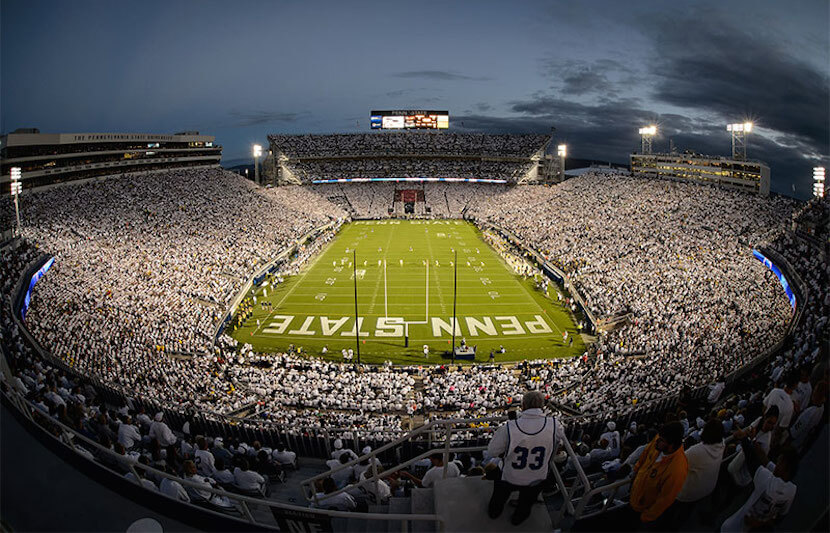
Penn State University Researcher Helps Beaver Stadium and Other Sports Venues Reduce Waste
Penn State University’s Beaver Stadium, home to the Nittany Lions football team, is the second largest university stadium in the U.S. It hosts seven home games each year with attendance for each game reaching anywhere from 110,000 to 150,000. Imagine the waste generated in the stadium and the surrounding parking lots, which together occupy 110 Read More
-
University of Michigan Launching Campus Driverless Bus in the Fall
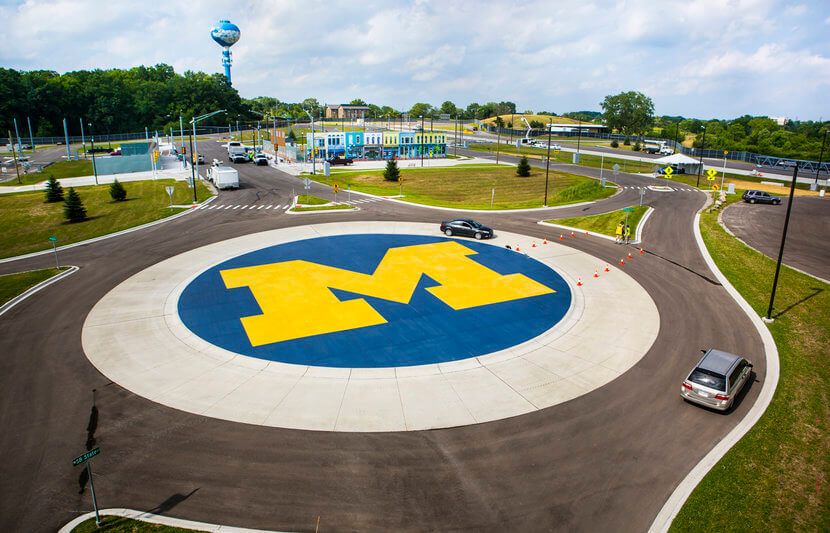
Starting fall semester, the University of Michigan will introduce a fully autonomous campus shuttle system, called the ARMA. Two buses, manufactured by the French company Navya, will transport up to 15 students, faculty, and staff on a two-mile route from the Lurie Engineering Center to the North Campus Research Complex on Plymouth Road. To implement Read More
-
Unity College Dining Services Wins Sustainability Award for Zero-Waste Efforts
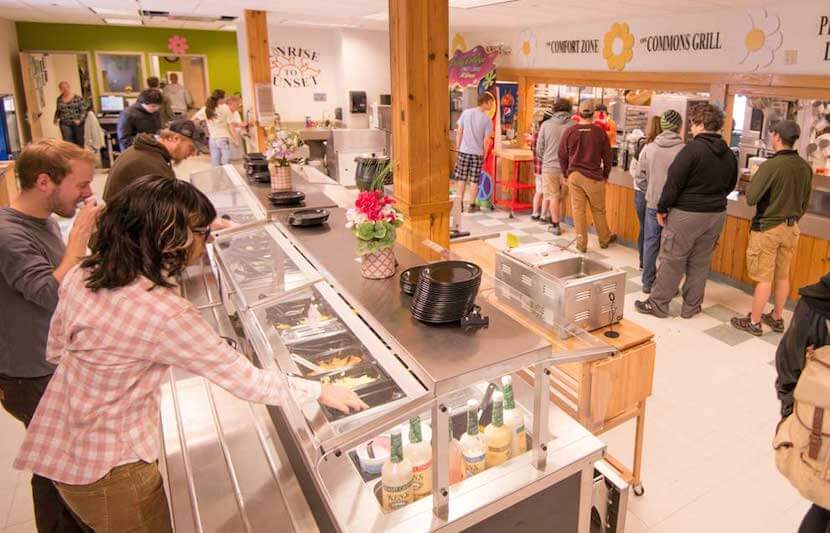
Unity College prides itself on being America’s Environmental College, and its many sustainability projects, including its quick transition to zero waste in its dining and catering facilities, supports that assertion. The college’s efforts to have zero waste in its dining and catering facilities were rewarded when Dining Services recently won the gold Sustainability Award in Read More