
A new eye-tracking study from German researchers found that full-color Nutri-Score labels on grocery products and shelf price tags draw significantly more consumer attention than greyscale versions — and that sustained attention influences what shoppers ultimately put in their carts.
The next time you pause in a grocery aisle scanning nutrition labels, the color of those labels may be doing more work than you realize. A new study published in Food Quality and Preference found that colorful Nutri-Score labels — the European front-of-pack system that grades foods from green A to red E — are far more eye-catching and attention-holding than their grey counterparts, and that visual attention often translates directly into purchasing decisions.
What the Research Found
Researchers from Göttingen University, in partnership with Osnabrück University of Applied Sciences, the German Institute of Food Technology, and Giessen University, recruited 199 participants in Germany and tracked where their eyes landed while they navigated a simulated supermarket environment. Participants were split into four groups, each exposed to a different labeling condition: full-color Nutri-Score on both the product package and the shelf price tag; greyscale labels in both locations; only a single multi-color label on the front of the package (the current standard in many supermarkets); or no label at all.
The eye-tracking data revealed a clear pattern — colorful labels were looked at more often and for longer stretches of time than monochrome ones. When participants fixated frequently on a dark green A or a yellow C label, they were likely to pick up that product. The warning power of the red E, however, told a more complicated story: even products marked with the unfavorable rating ended up in shopping baskets, suggesting that the deterrent effect of poor scores may not be as strong as advocates had hoped.
What Researchers Are Saying
“Our findings show that the five-coloured, traffic-light Nutri-Score label is clearly more noticeable on price labels than when displayed in grey,” lead author Isabelle Weiß, a doctoral researcher at Göttingen University, said in a news release. “The greater visibility of the labels can make it easier to compare products and support people in making more health-conscious choices. The more companies display the Nutri-Score on their products, the sounder the comparison will be for consumers.”
“The Nutri-Score is intended to provide simple guidance in the supermarket. It is crucial that shoppers can recognise and understand the information at a glance. A multi-coloured label can be helpful here,” added Clara Mehlhose, a postdoctoral researcher at Göttingen University, who led the research.
Understanding Nutri-Score
The Nutri-Score system uses a five-tier, color-coded scale — from dark green (A, indicating a nutritionally favorable product) through yellow (C) to red (E, indicating a less favorable nutritional profile). Adopted voluntarily by companies in several European Union countries including Germany and the Netherlands, it was designed to give shoppers a fast, intuitive read on a food’s overall nutritional quality without requiring them to decode complex ingredient panels.
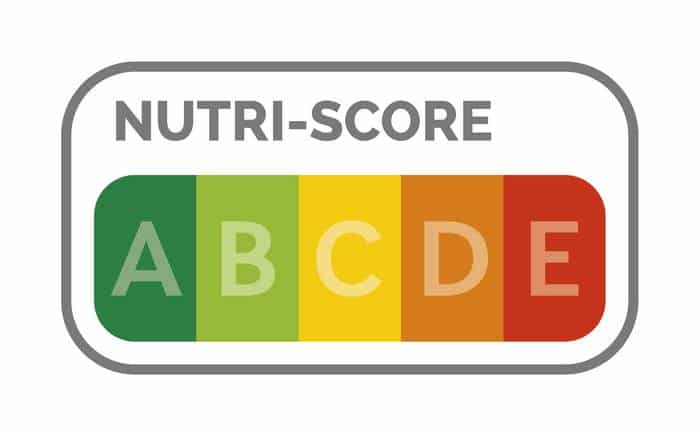
Caption: The Nutri-Score label uses a colour-coded five-level scale ranging from dark green A, which indicates a favourable nutritional profile, to red E, which indicates a less favourable one.
Credit: Federal Ministry of Agriculture, Food and Regional Identity
Some retailers have taken to printing the label in greyscale directly on price shelf tags as a cost-saving or design choice. This study specifically challenges that practice, suggesting the monochrome version sacrifices much of the label’s functional purpose.
Why It Matters for Students and Young Shoppers
For college students navigating tight budgets and fast grocery runs, nutrition labels can be a quick shortcut to making more informed food choices — but only if those labels actually register visually. Research consistently shows that young adults are more likely to engage with visual, color-coded information than with text-heavy nutritional data. This study reinforces the argument that how health information is presented is nearly as important as what that information says.
The findings also carry implications for food policy. As EU regulators continue deliberating over whether to make Nutri-Score mandatory across member states, research like this adds weight to the case for standardizing full-color labeling — both on product packaging and on store shelf tags. The study’s authors argue that retailers and policymakers should treat color as a non-negotiable feature of any effective front-of-pack nutrition system.
Limitations and Next Steps
The study was conducted in a simulated supermarket setting rather than a real retail environment, which may limit how directly the findings translate to actual shopping behavior. The red E result — that poor ratings didn’t reliably deter purchases — also points to an area researchers say warrants further investigation. Whether stronger labeling designs, better consumer education, or both are needed to activate genuine avoidance behavior around low-scoring products remains an open question.
Source: University of Göttingen