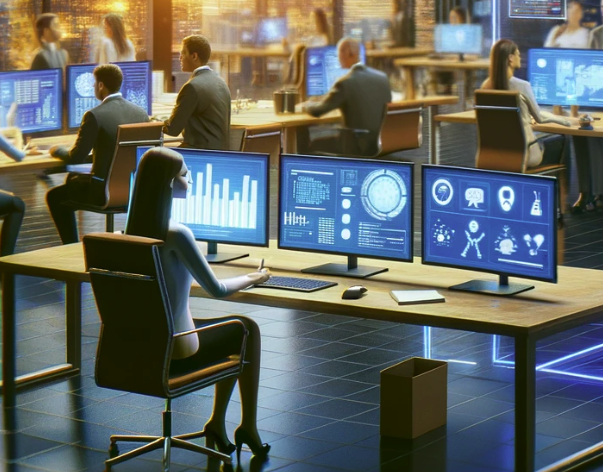
As we stand on the brink of a new era dominated by artificial intelligence (AI) and automation, it’s crucial for students and young professionals to carefully consider their career paths. The impact of AI on the job market is undeniable, presenting both challenges and opportunities. In this context, pursuing a career in industrial machinery/components emerges as a remarkably strategic choice, promising not only longevity but also the chance to be at the forefront of technological innovation.
Understanding the Industrial Machinery/Components Sector
The industrial machinery/components sector, a cornerstone of the manufacturing industry, encompasses the production, design, and maintenance of machines and components used in various industries. These range from automotive to aerospace, food processing, and beyond. This sector is pivotal in ensuring the efficiency, reliability, and innovation of manufacturing processes around the globe.
Why It’s a Promising Career Path
In the face of rapid technological advancements, especially in AI, the demand for skilled professionals in the industrial machinery/components sector is expected to rise. AI is transforming how machinery operates, making them smarter, more efficient, and capable of predictive maintenance. Herein lies the opportunity for an exciting career that is both stable and filled with the potential for growth.
How AI Is Revolutionizing the Sector
AI’s integration into industrial machinery and components is reshaping the landscape of manufacturing. Automation, powered by AI, not only speeds up production but also increases precision, reduces waste, and minimizes downtime through predictive maintenance. Additionally, AI-enabled machinery is playing a crucial role in the transition towards more sustainable manufacturing practices by optimizing energy use and reducing emissions.
Preparing for a Career in Industrial Machinery/Components
Given the importance of AI in molding the future of this sector, a strong foundation in STEM subjects, combined with knowledge of AI and machine learning, is crucial. TUN AI stands as an invaluable resource in this journey. It offers:
Conclusion:
The intersection of AI and industrial machinery/components is not just reshaping the manufacturing landscape but also opening up a realm of opportunities for those ready to dive into this evolving career path. By embracing the change, focusing on continuous learning, and leveraging platforms like TUN AI, students and professionals can unlock a future where their skills are in high demand, their work has a global impact, and their career growth is virtually limitless. The future of work in industrial machinery/components, powered by AI, is bright, promising, and waiting for you.