
Researchers at UC San Diego have developed a revolutionary wristband sensor that monitors glucose, alcohol and lactate levels, alongside critical cardiovascular signals, in real time. This innovative wearable aims to transform diabetes management and cardiovascular care.
A groundbreaking wearable wristband has been developed by researchers at UC San Diego, promising to significantly enhance diabetes management and cardiovascular health monitoring.
Published in Nature Biomedical Engineering, this innovative device continuously tracks glucose, alcohol and lactate levels, along with key cardiovascular signals, providing comprehensive real-time health data.
The wristband features a microneedle array designed for painless sampling of interstitial fluid just beneath the skin. This cutting-edge technology measures glucose, lactate and alcohol via three different enzymes embedded within the minuscule needles.

Caption: The wristband consists of a microneedle array worn on top of the wrist to measure glucose, alcohol and lactate levels in the interstitial fluid under the skin.
Credit: An-Yi Chang
The microneedle array is easy to replace, minimizing risks of allergic reactions or infections and supporting extended wear.
In addition to chemical monitoring, the wristband employs an ultrasonic sensor array to measure blood pressure and arterial stiffness, while ECG sensors track heart rate directly from wrist pulses.
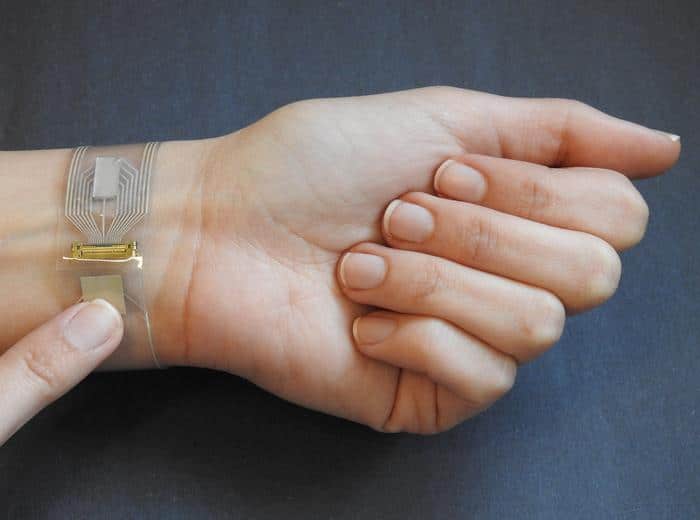
Caption: The wristband consists of an ultrasonic sensor array and ECG sensors worn at the bottom of the wrist to measure blood pressure, arterial stiffness and heart rate.
Credit: An-Yi Chang
According to experts, these physiological signals are crucial indicators of cardiovascular risk, a common concern for those with diabetes but rarely monitored continuously outside clinical settings.
“Comprehensive and effective management of diabetes requires more than just a single glucose reading,” co-first author An-Yi Chang, a postdoctoral researcher in the Aiiso Yufeng Li Family Department of Chemical and Nano Engineering at UC San Diego, said in a news release.
Factors like diet, alcohol intake, exercise and stress significantly influence blood sugar and heart health, aspects traditional monitoring systems fail to fully capture.
“By tracking glucose, lactate, alcohol and cardiovascular signals in real time, this pain-free wristband can help people better understand their health and enable early action to reduce diabetes risk,” added Chang.
The device was made possible by a collaboration between two research groups led by Joseph Wang and Sheng Xu, who are both professors in the Aiiso Yufeng Li Family Department of Chemical and Nano Engineering at UC San Diego.
Wang’s team specializes in wearable technology that monitors multiple chemical biomarkers, while Xu’s group focuses on wearable ultrasound sensors for cardiovascular signal tracking. Combining their expertise resulted in a device capable of measuring both biomarkers and cardiac signals simultaneously.
A smart device connected to the wristband displays live data streams from the sensors, providing users real-time insight into how daily activities — such as meals, alcohol consumption or exercise — affect their metabolic and cardiovascular health.
Tests have shown the wristband’s readings are in excellent agreement with commercial devices.
Glucose monitoring results closely matched those of standard blood glucose meters and continuous glucose monitors. Alcohol intake tracking was comparable to breathalyzer results, while lactate monitoring during exercise aligned with blood lactate meters.
Additionally, the wristband offered continuous, simultaneous monitoring of blood pressure, heart rate and arterial stiffness.
This comprehensive monitoring could provide users with a dynamic physiological snapshot throughout their day, helping patients and clinicians identify dangerous trends early, potentially alerting users to cardiovascular risks that standard glucose monitors might miss.
Next steps for this technology include expanding its capabilities to monitor additional chemical and cardiovascular markers and designing new power solutions such as sweat or sunlight.
The researchers also envision integrating machine learning algorithms to analyze the vast amounts of data collected by the system.