
MIT engineers have developed a groundbreaking device that could protect diabetes patients from life-threatening hypoglycemia by automatically releasing glucagon when blood sugar levels drop too low.
Researchers at MIT have developed a revolutionary implantable device that could prevent life-threatening hypoglycemia in people with Type 1 diabetes. This innovative solution, described in a study published today in Nature Biomedical Engineering, has the potential to transform diabetes management by automatically delivering glucagon, a hormone that raises blood sugar levels, when they drop too low.
For individuals living with Type 1 diabetes, hypoglycemia poses a constant risk. When blood sugar levels plummet, it can lead to confusion, seizures and even death if untreated.
The current standard treatment requires patients or caregivers to inject glucagon. However, many patients may not recognize their blood sugar is dangerously low, especially while sleeping or when young children are involved.
To tackle this problem, a team of engineers at MIT has designed an emergency device that can be implanted under the skin.
“This is a small, emergency-event device that can be placed under the skin, where it is ready to act if the patient’s blood sugar drops too low,” senior author Daniel Anderson, a professor in MIT’s Department of Chemical Engineering and a member of MIT’s Koch Institute for Integrative Cancer Research and Institute for Medical Engineering and Science (IMES), said in a news release. “Our goal was to build a device that is always ready to protect patients from low blood sugar. We think this can also help relieve the fear of hypoglycemia that many patients, and their parents, suffer from.”
The device, which is about the size of a quarter, contains a 3D-printed polymer reservoir that houses a powdered form of glucagon, ensuring long-term stability.
It uses a shape-memory alloy that changes shape when heated, releasing the glucagon into the bloodstream. This heating mechanism is triggered remotely, and the device can interface with continuous glucose monitors for automatic activation.
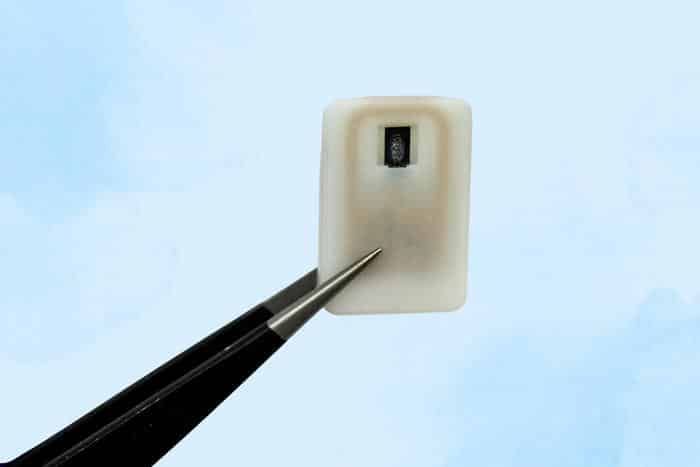
Caption: A new implantable device carries a reservoir of glucagon that can be stored under the skin and could save diabetes patients from dangerously low blood sugar.
Credit: MIT
“One of the key features of this type of digital drug delivery system is that you can have it talk to sensors,” added lead author Siddharth Krishnan, a former MIT research scientist who is now an assistant professor of electrical engineering at Stanford University. “In this case, the continuous glucose-monitoring technology that a lot of patients use is something that would be easy for these types of devices to interface with.”
In tests with diabetic mice, the device successfully stabilized blood sugar levels within 10 minutes, effectively averting hypoglycemia.
Additionally, the researchers tested the device with epinephrine for emergency heart attack treatment and anaphylactic shock, demonstrating its versatility.
The researchers implanted the devices for up to four weeks in this study but aim to extend this period to at least a year.
“The idea is you would have enough doses that can provide this therapeutic rescue event over a significant period of time. We don’t know exactly what that is — maybe a year, maybe a few years, and we’re currently working on establishing what the optimal lifetime is. But then after that, it would need to be replaced,” Krishnan added.
Plans are in motion for extended animal studies, with the goal of beginning clinical trials within three years.
The development of this device represents a significant leap forward in diabetes care and emergency medicine delivery, potentially offering peace of mind and enhanced safety for those living with diabetes.
“It’s really exciting to see our team accomplish this, which I hope will someday help diabetic patients and could more broadly provide a new paradigm for delivering any emergency medicine,” added co-author Robert Langer, the David H. Koch Institute Professor at MIT.